Why People Realise Late That Their Health Insurance Coverage Is Not Enough
Zyra Insurance
May 12, 2026
7 min read
Contents
The Illusion of Sufficient Coverage
Common Mistakes That Lead to Underinsurance
How to Correctly Structure The Coverage
Work Smartly with Zyra AI
Base vs. Top Up vs. Super Top Up
Share


Financial planning is of utmost importance today. Insurance is viewed as a "set it and forget it" task. However, with the soaring medical costs, many individuals discover that they are not really prepared for future inflation. They realise it too late that they have a hollow shell insurance coverage. The primary reason for this late realisation is a fundamental misunderstanding of the total coverage that should suffice for the present economic climate.
Much like the 5 Common Mistakes People Make When Choosing Insurance Deductibles, a failed secured adequate coverage often follows the low monthly costs against the actual protection. Under major medical emergencies, a standard policy with a basic sum insured can be used up in fewer days. Understanding what is sum insured in health insurance is important, as this quick usage might cause the policyholder to deal with costly financial decisions under extreme pressure.
The Illusion of Sufficient Coverage
Mostly, people purchase an insurance policy guaranteeing them coverage of ₹5 lakh to ₹10 lakh. They feel it would suffice. However, this security often results in illusion.
Medical Inflation
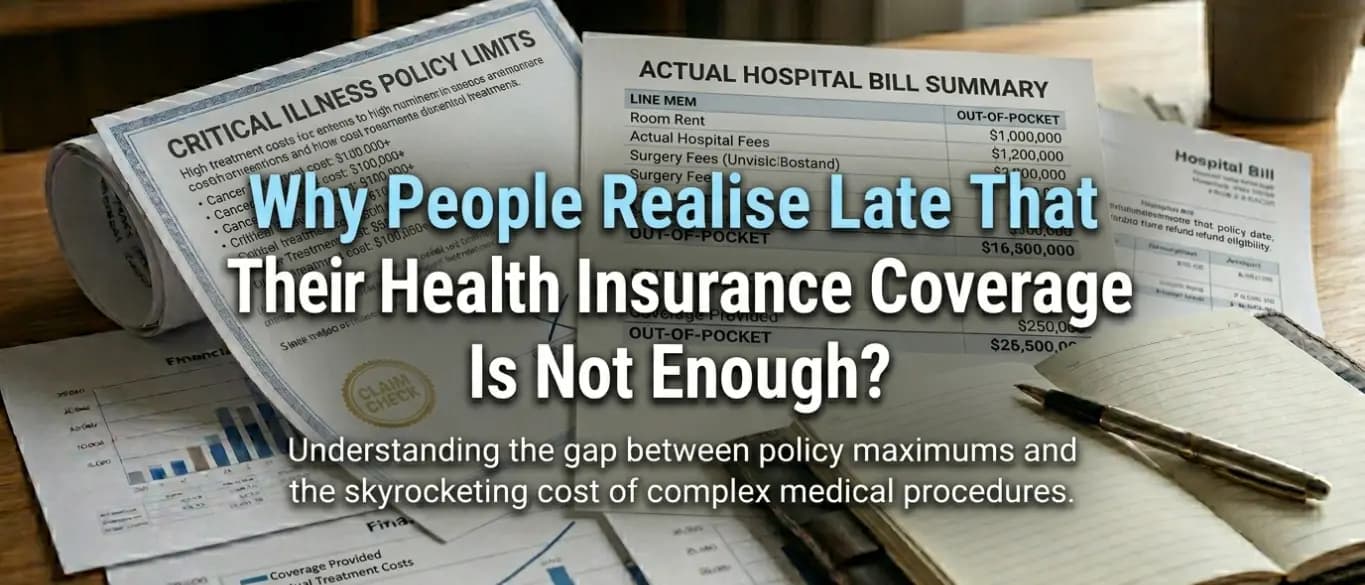
Inflation in the medical field often outpaces the general inflation. What used to cost around ₹3 lakh five years ago may cost ₹7 lakh today. In case of a static policy, the insured might effectively turn underinsured. It results in a situation where the insurance policy actually adds up to it whenever the bill arrives.
The Deductible
- Comprehensive Safety: With the total claims crossing the deductible, the super top up ensures covering the rest.
- Financial Preparation: It prepares a "perfect blend between affordability and enough coverage" for those buyers who might face multiple medical hospitalisations within a year.
Common Mistakes That Lead to Underinsurance
Amongst several corporate or high-deductible plans, the buyer opts for a specific insurance deductible. It is the total sum which they share before the insurance service provider starts paying them. In case the buyer miscalculates the pre-assessment, all their financial capabilities to fulfil this deductible might cost them their emergency bills.
Bridging the Difference: Top Up vs. Super Top Up Health Insurance
When the base insurance policy falls short, people tend to move towards a good top-up health insurance. However, there is a very fine gap between a standard top-up and a super top-up policy. Understanding the sub limit in health insurance is equally important, as this difference can make or break the buyer's financial stability.
Top Up Health Insurance
A top-up mediclaim policy covers medical expenses exceeding its pre-defined limit (the deductible) for a single insurance claim.
- The Single-Claim Trigger: A standard top-up only comes into foreplay if a single hospitalisation bill bypasses the deductible.
- The Limitation: If the buyer undergoes two separate hospitalisations within a year, each costing around ₹4 lakh, and the deductible is ₹5 lakh, a standard top-up will not cover the additional sum.
Super Top Up Policy
A super top-up is a robust player covering the medical extras:
- Aggregate Coverage: It is not like the other standard top-ups. A super top-up health insurance plan offers a total aggregate coverage for all the medical bills within the policy year.
Referring to these insights of health insurance top-up plans, several common behavioural patterns contribute to realising insufficient coverage:
- Choosing a Random Sum Insured: Several people opt for a coverage amount without considering their medical history or lifestyle choices.
- Over-Reliance on Corporate Plans: Corporate policies charge heavy deductible in insurance or co-payments that most employees do not fully understand until they have to make a claim.
- Ignoring High-Risk Profiles: High-risk individuals often prefer low-coverage plans to save on their premiums, which might not be economically convenient in case of frequent claims.
- Misunderstanding the Tax Link: Seeking life insurance tax-deductible benefits under Sections 80C and 80D, buyers often choose the lowest possible premiums. This choice results in low coverage.
- Delaying the Upgrade: Many buyers wait for a health crisis to upgrade their policy. The new one adds new conditions that either exclude or are subject to a longer waiting period in the old one.
How to Correctly Structure The Coverage
A balanced base policy is a key to never realise too late that the insurance coverage lacks anything. Choose a good top-up health insurance intelligently.
Assess The Financial Capacity
The buyer needs to know that they can meet the deductible amount easily in the event of a medical crisis. In case the base policy covers ₹5 lakh, adding a deductible of ₹5 lakh on the super top-up builds a seamless cost handoff.
Match Coverage to Life Stage
- Young, Healthy Individuals: Young and healthy buyers can easily go for a higher deductible and a lower cost top-up mediclaim policy. This helps them with premiums.
- Families: Family benefits the most from a super top-up policy with a minimal deductible covering the family's aggregate risk.
- High-Risk Individuals: High-risk individuals should prioritise a low deductible and high coverage policy. This choice ensures all medical expenses are easily managed.
Work Smartly with Zyra AI
The market has many confusing insurance options today. A manual comparison between these several options can be troublesome.
Zyra AI assesses these pitfalls by:
- Offering an in-depth analysis of the existing policy.
- Supporting the buyer to understand the true meaning of the health insurance deductible and how it adds up to the super top-up layers.
- Assessing the buyer's lifestyle and associated health risks to recommend whether a top-up health insurance or a super top-up is their perfect fit.
Base vs. Top Up vs. Super Top Up
| Feature | Base Health Insurance | Top Up Plan | Super Top Up Policy |
|---|---|---|---|
| Primary Goal | Ground-level protection | Protection against one big bill | Comprehensive annual protection |
| Deductible | Usually Zero or Low | High (usually matches base policy) | High (usually matches base policy) |
| Premium | High | Very Low | Low to Medium |
| When to Buy | Immediately | When healthy but budget-conscious | For families and long-term security |
Conclusion
Realising that health insurance coverage is insufficient while sitting outside a hospital billing office is the 'costliest financial decision' ever. No one should encounter this mistake. The primary objective of health insurance is not just saving on premiums but rather preparing the buyer for their future.
A super top-up health insurance layer accurately assesses the buyer's health insurance deductible. It creates a perfect balance between the policy's affordability and coverage.
Do not wait until the unexpected event strikes. Thoroughly assess your financial status, check your lifestyle choices and use AI-driven services such as Zyra AI to ensure secure protection.